Wednesday, November 8, 2017

The benefits of aspheric lenses

Spherical aberration correction

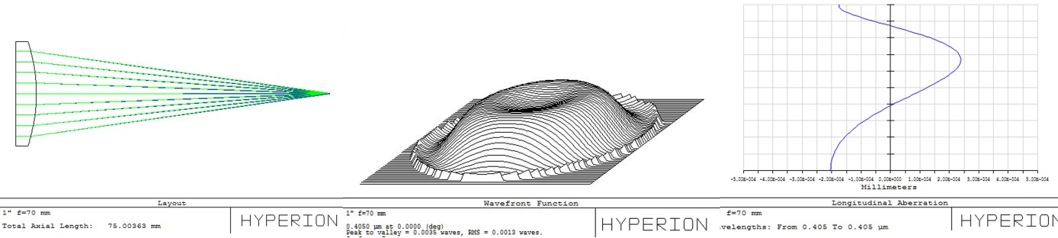
The most significant benefit of a non-spherical lens is that it can be corrected for spherical aberrations. Spherical aberration is caused by using the surface of the sphere to focus or focus on the light. Therefore, in other words, all of the spherical surface, no matter whether there is any measurement error and manufacture error, will appear spherical aberration, as a result, they will need a not spherical or aspherical Lenses surfaces, carries on the correction. By adjusting the constant of the cone and non-spherical coefficients, any non-spherical lens can be optimized to minimize the image difference. For example, see figure 1, which shows a spherical lens with a significant spherical aberration, and a non-spherical lens with almost no spherical difference. The spherical difference in the spherical lens will allow the incoming light to focus at many different points, creating a blurred image. In a non-spherical lens, all the different light rays will focus on the same spot, resulting in less blurred and more quality images.

In order to better understand the aspheric lens and spherical lens in terms of focus performance difference, please refer to a quantitative model, in which we can observe two 25 mm diameter equal to the focal length of 25 mm lens (f / 1 lens). The following table compares on the shaft (0 °Angle) and outside the shaft(0.5 °and 1.0 °Angle) in parallel, monochromatic light (wavelength 587.6 nm) generate the light spot size or fuzzy.Spherical lenses are several orders of magnitude larger than non-spherical lenses.

The benefits of additional performance
Although the market also has many different techniques for correction by spherical aberration resulting from the surface, however, these other technology in the imaging performance and flexibility, are far less than aspheric lens offer. Another widely used technique involves increasing f / # by "reducing" lenses. While this improves the quality of the image, it also reduces the flux in the system, so there is a trade-off between the two.

On the other hand, when using aspheric lens, the additional aberration correction support users in the realization of high flux (low f / #, high numerical aperture) of the system design at the same time, still keep a good image quality. Higher luminous flux design causing image degradation can be sustainable, because a slightly reduced image quality performance will still be provided above the performance of the spherical system can provide. Consider a focal length of 81.5 mm, f / 2 triad lens (figure 2), the first is composed of three spherical surface, the second is one of the first surface of spherical surface (the rest) for spherical surface, the two design have exactly the same type of glass, effective focal length, field, f / #, as well as the overall length of the system. The following table is quantitatively compared with the axis of the modulation transfer function (MTF) at the @ 20% contrast and the parallel, multicolored 486.1 nanometers, 587.6 nm, and 656.3 nm rays. A triad of aspheric surface lens has been used, all on the viewing angle showed higher imaging performance, its high tangential and sagittal high resolution, compared with only the triad of spherical surface lens is three times higher.

Glass Precision Aspherical Lenses, IR Aspherical Lenses, Off-Axis Parabolic Mirrors


Optical Machining Centers

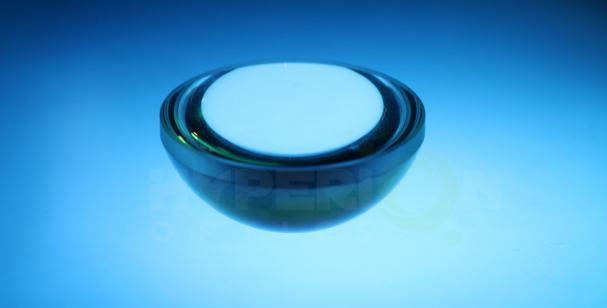
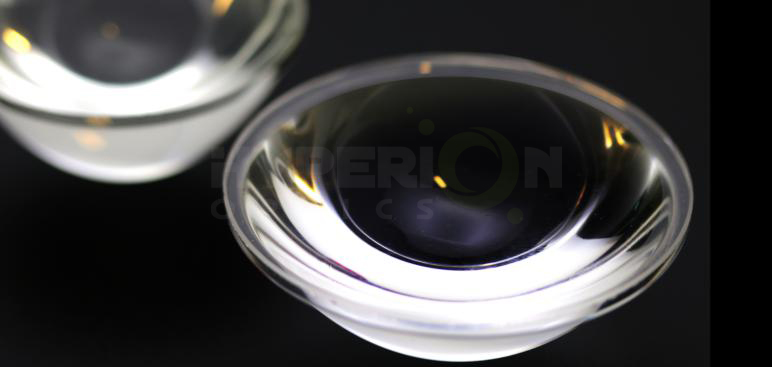
Due to the more complex surface profile of asphere which significantly reduces or eliminate optical aberrations as compared to the simple lens, Aspheric lenses have at least one surface that is not a true sphere,It has been more widely exploited in the lens optical design stage.


Using aspheres to replace a much more complex multi-element spherical system leads to the result of the optical device can be more compact, lighter, transmit more light and in certain cases be cost effective than the multi-lens spherical design.


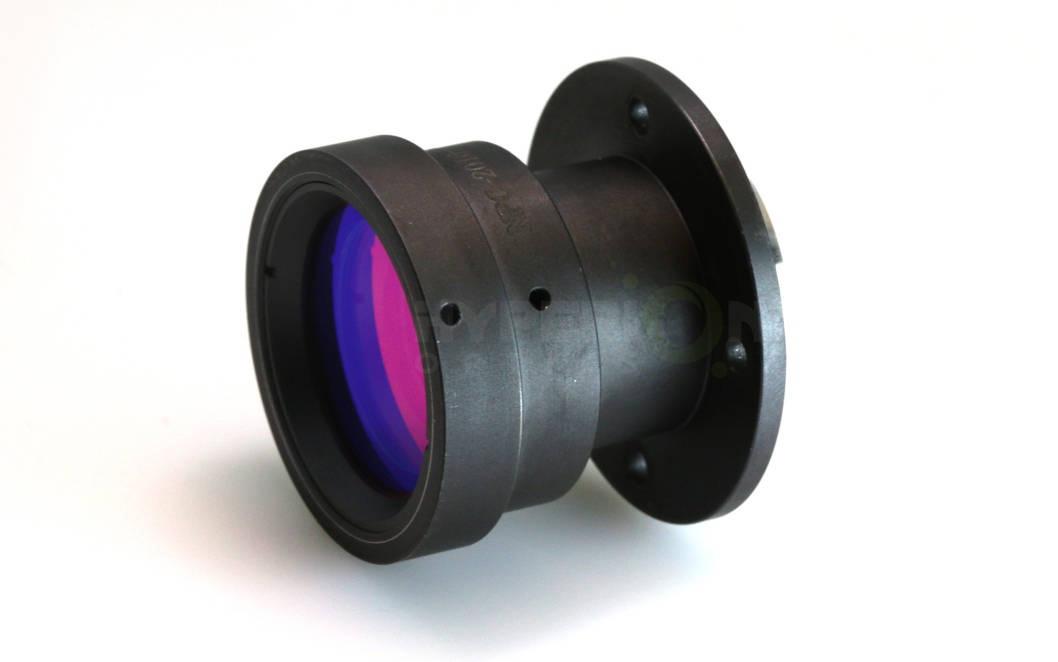
At Hyperion Optics, we are equipped with Optotech asphere machine which offers our customers with contour deterministic micro grinding (CDMG) service, uses the accuracy and repeatability of a computer numerically controlled machine to grind the optical shape. We start by grinding the best-fit sphere to remove the bulk material and contour the aspheric shape into the optical material from edge to center. Typical materials available of our fabrication capability are optical glass, ZnSe, ZnS, BaF2, GaAs, and chalcogenide glass. We also accept materials supplied by customers.

Optical Machining Centers capability:

  • Capacities from 5mm to 400mm
  • 1000 to 24,000 rpm tool spindle
  • Automatic curve correction
  • Tool& Workpiece probing system
  • Dual tool spindles option


Following such manufacturing procedure, there is no extra investment on tooling and processing fixtures for sphere substrates and preparation, contributes customers a quick and productive start to the schedule. With the asphere part ground, the profilemeter measure will be conducted and transfer measured data to the polisher. In our polishing process, our experienced operators can control the asphere form error within 1 micron (Depends on the diameter of the parts).
Hyperion Optics values every single opportunity offered by customers; our typical MOQ is two pieces for optical performance approval purpose at customers’ end; Our fast asphere prototyping has become one of our most popular services for customer low ratio initial production LRIP projects. We can process both sphere and asphere parts at the same time for customer’s objective or eyepiece design, which secures a reliable timeline management to meet LRIP tight timing requirement. Meanwhile, we also provide coating package with competitive pricing serving this rapid prototyping concept.

Our rapid aspheric prototyping / LRIP service including:
1.When Off-the-shelf aspheric parts do not fit perfectly in your system, Hyperion Optics can design and manufacture the Precision aspheric lenses by your system-level optical requirement.
2.Built to print, Hyperion Optics fabricates aspheric lenses and provides inspection report by your print.
3.Reverse engineering based on samples you provide, Hyperion Optics runs in-depth mapping and optical performance testing on either aspheric lens part or lens system level products, redesign and optimize including manufacturing and assembly.
Please contact one of our a sphere experts today and find out what Hyperion Optics can help you with your projects.
Still finding aspheric lens manufacturers? Leave us a message now.
Asphere Lens manufacturing


Manufacturing Limits for Aspheric Surfaces
Based on Form Error Tolerance
Form Error > 2μm Lower Resolution Profilometry (2-D)1
Attribute
Minimum
Maximum
Diameter (mm)
3
250
Local Radius (mm)
-8 (Concave)
Sag (mm)
0
502
Departure (mm)
0.01
20
Included Angle (°)
0
120

Form Error 0.5 – 2μm Higher Resolution Profilometry (2-D)1
Attribute
Minimum
Maximum
Diameter (mm)3
3
250
Local Radius (mm)
-12 (Concave)
Sag (mm)
0
252
Departure (mm)
0.01
20
Included Angle (°)
0
150

Form Error < 0.5μm Interferometry with Stitching (3-D)
Attribute
Minimum
Maximum
Diameter (mm)3
3
250
Local Radius (mm)
-13 (Concave)
Sag (mm)
0
252,4
Departure (mm)
0.002
1
Included Angle (°)
0
120+5

Labels: , , , , , , , , ,

Collimating Lenses


Hyperion Optics
Hyperion Optics offers the most affordable custom design collimating lenses, including singlet or chromatic lenses. Customers might find the collimators they purchase for their system do not perfectly collimate the light source they are using to affect the final performance. Hyperion Optics provides a free design for custom collimators, no matter it is a single format or chromatic version which corrects for spherical and chromatic aberrations.

Our custom collimators help to make parallel the light enters your setup, allow you to control the field of view, collection efficiency, and spatial resolution. Our existing collimator design is responsive at UV-VIS, or VIS-NIR wavelength.

existing collimator design

aspherical collimator lens for sale

Hyperion Optics provide laser collimating lens and also provide aspherical collimator lens for your current setup replacement cost wise in volume production. Sometimes it is expensive you order aspherical collimators from famous brand, we can reverse engineer and make it more fordable to maintain your competency in the market, with even better performance since the design is optimized for your application. Please refer to our reverse engineering and aspherical surface production pages for more information.

To start with your customized collimating lens design, please verify the expected spot size and focal length of your setup:

customized collimating lens design
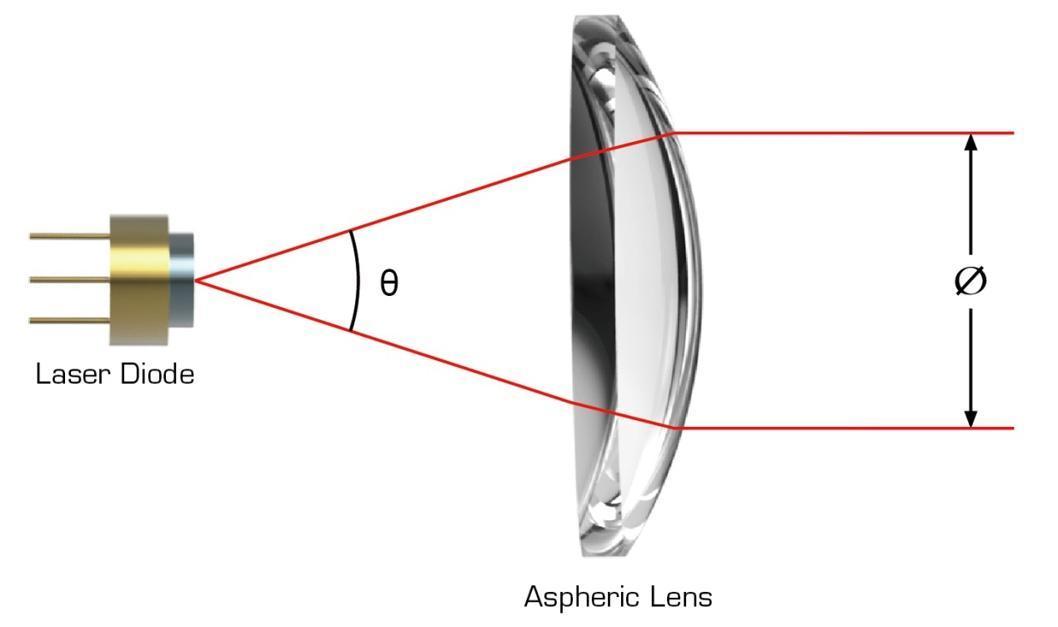
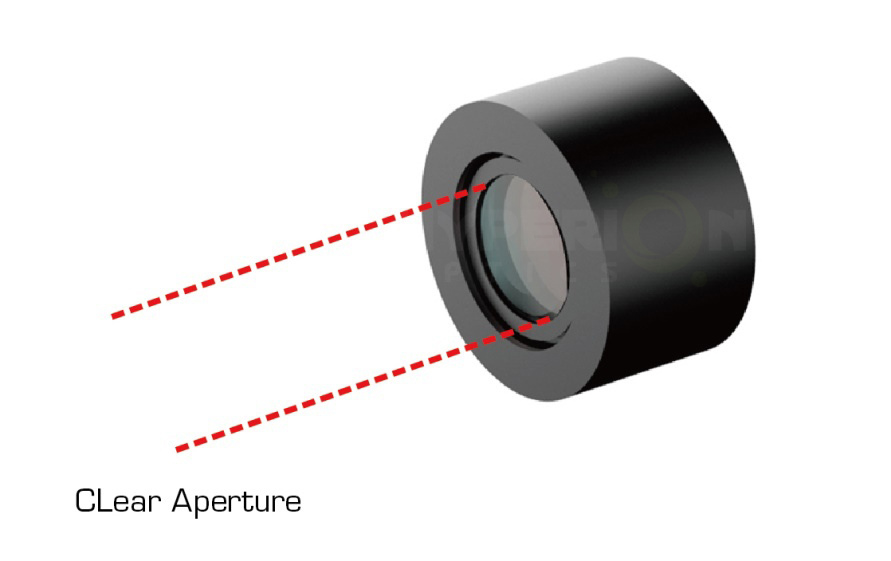
For a point source, near collimation can be assumed so that the beam will be the “clear” aperture of the lens. If a fiber is attached to the lens, the divergence angle can be calculated depending on the height of the thread. This information allows you to calculate the spot size at a distance.


  • Tan(Theta) = (Height of fiber)/(Focal Length)
  • Focal Length = Height of fiber = (1/2)*core diameter
  • Theta = divergence angle

Should I choose a chromatic collimator or singlet lenses?

For applications such as absolute irradiance, benefits the most from the use of achromatic lenses, which helps to eliminate the unexpected “contamination” of the spectrum caused by wavelength outside optimal FOV.

Further, Hyperion Optics offers free mechanical design for your setup which including lens mount, barrel, and assembly to fit. Contact our Sales engineers today and find out the best collimating solution for your current setup.

Labels: , , , , , ,

Wednesday, September 6, 2017

Laser Optics

Protect scan lenses from backsplatter and other workplace hazards, Hyperion Optics offers protective windows -- also known as debris windows -- that are either included as the overall scan lens assembly part, or sold separately. These plano-plano windows are available in both ZnSe and Ge materials and also supplied mounted or unmounted.

ZnSe windows feature our standard AR or DAR coating. Ge protective windows feature either our standard AR coating, or an optional diamond-like carbon coating (DLC) designed to withstand the most severe conditions likely to be encountered in industrial operations.

For lasers with infrared wavelengths, such as, for example, 10.6 µm in CO2 lasers, lenses and windows made of zinc selenide (ZnSe) are used. Silicon or copper mirrors are used as mirrors. Phase shift mirrors used to produce circular polarization are also available. Beam expanders and diffractive elements for beam shapes complete our product range.

Zinc selenide components are primarily used for transmissive optics. They are made exclusively with high quality "laser grade" material that can be used even in the kW range. When coated, these zinc selenide elements have a transmittance of T > 99.5 % at 10.6 µm.
buy protective windows, contact rfq@hypoptics.com


Protective Windows

Protective Window is applied to isolate different physical environments while allowing light to pass through. When selecting windows, please consider the material, transmission, scattering, wave front distortion, parallelism and resistance to certain environment. We offer all kinds of windows, which are made from different materials.
Single layer, multiplayer anti-reflecting coatings on optical windows are also available upon request.

Specifications
Diameter Tolerance: +0.0, -0.2 mm
Thickness Tolerance: ±0.2mm
Clear Aperture: >80%
Parallelism: <3 arc min
Surface Quality: 40-20 scratch & dig
Flatness λ /2 @632.8nm per 25mmDia

ZnSe Focusing Lenses

Hyperion Optics supplies off-the-shelf ZnSe focusing lenses. Please select from below specifications.

Specifications
Diameter Tolerance +0/-0.13mm
Thickness Tolerance ±0.25mm
FL Tolerance <±2%
Centration <3 arc minutes
Clear Aperture >90%
Surface Figure <λ/2 per 1”Dia@632.8nm
Surface Quality 40-20 scratch and dig
AR/AR coating R<0.15% per surface @ 10.6um

Labels: , , , , , ,

Optical Components Sale from Hyperion

Focusing on custom optical lenses manufacturing, Hyperion is able to offer all kinds of optics components. Here as below,  the general optical components:

Spherical Lenses
Achromatic Lenses
Aspherical Lenses
Cylindrical Lenses
Infrared Lenses
Mirrors
Filters
Prisms
Windows
Dome
Crystals
Laser Optics

And let's have a general understanding of these components:

Spherical Lenses
Singlet lens is a lens consisting of a pure single element, which can be considered as the fundamental element of developing optical systems. Based on optical engineers’design, multiple singlet lenses might be utilized within an optical system with other optics.

Achromatic Lenses
We are expert of achromatic spherical and cylindrical lenses manufacturing and master of achromatic lens design helps minimize spherical aberrations. we help customers with material selection advice for cemented elements before production, analyze potential production risks, and carefully assess the cementing precision definition of the prints.

Aspherical Lenses
Hyperion Optics’ manufacturing equipment expand our aspherical products’ deliverability to LWIR applications, from high precision VIS imaging systems to infrared athermal lenses, we are able to process on optical glasses and infrared materials such as Germanium, Zinc Sulfide, Zinc Selenide, Calcium Fluoride, Chacolgenide glasses etc.

Cylindrical Lenses
Hyperion Optics’ cylindrical components have been widely used for laser based applications with reliable optical performance and durability. We are able to provide Zygo report of all cylindrical surfaces we produce, and intensive measurement can be met upon customer’s request, such as optical axis deviation.

Infrared Lenses
We work on a wide range of infrared materials that covers almost full infrared spectrum. Hyperion Optics supplies Zinc Selenide, Zinc Sulfide, Silicon, Germanium, Gallium Arsenide, and Calcium Fluoride, Barium Fluoride as well as Chalcogenidespherical lenses and aspherical lenses. We use laser based edging device to control MWIR and LWIR lenses’ decenter deviation, and test on reflective centering station to fulfill extreme precise tasks.

Mirrors
Optical Mirrors are designed to reflect light for a variety of applications, including beam steering, interferometry, imaging, or illumination. Optical Mirrors are used in a wide range of industries, such as life sciences, astronomy, metrology, semiconductor, or solar.

Hyperion Optics offers a range of laser, flat, metal substrate, focusing, or specialty Optical Mirrors in a multitude of reflective coating options, including Protected Aluminum, Enhanced Aluminum, Protected Silver, Protected Gold, or Dielectric. Choosing the proper reflective coating option ensures high reflectivity of the needed wavelength or wavelength range. Optical Mirrors designed for laser applications are optimized for the given laser wavelength. Additionally, Optical Mirrors designed for lasers feature damage thresholds that are suitable for the designated laser. Metal substrate Optical Mirrors are ideal for applications requiring a constant coefficient of thermal expansion between the Optical Mirror and the mount. Optical Mirrors with a concave surface are ideal for light focusing applications.

Filters
We equipped with 4 coating chambers to provide various filters to our customers. For custom specifications, please talk to our coating engineers, we are more than happy to simulate the coating result for you. Contact us today, and find out our coating capability for your needs.

Prisms
Hyperion Optics supplies a range of prisms to meet UV-Visible-NIR applications, with high surface quality and tight tolerance angles.  Our materials selection ranges from flint/crown glasses, fused silica, ZnSe, CaF2 etc.

Windows
Hyperion Optics supply a range of custom precision grade windows, elliptical windows to seal optical enclosures especially suited to small power laser applications. Windows can be provided uncoated, or AR coated on single or both faces, or to your custom wavelength requirement. 

Dome
At Hyperion Optics, we have strict control of wall thickness variation spec by utilizing most reliable deterministic CNC machine tools, we grind and polish optical glass, fused silica and zinc sulfide for applications range from visible to infrared.

Crystals
Hyperion Optics provides optical components, including laser crystals for a wide range of laser, semiconductor, military, space and fiber optics applications. We work on high power visible and UV light generation by delivering high quality nonlinear products reaching our customer specifications.

Our crystals solution includes BBO, BIBO, KTP, anti gray tracking KTP, LiNbO3, Nd YAG crystal and wafer and much more. With 1/10 lambda precision, coated/un-coated options, competitive pricing.

KTP crystal is mostly used as nonlinear crystals for frequency doubling of solid-state Nd:YAG crystal or Nd:YVO4 crystal laser, as it has large nonlinear optical coefficients, wide angular bandwidth and small walk-off angle, broad temperature and spectral bandwidth. KTP crystal also has high electro-optic(E-O) coefficient and low dielectric constant, and large figure of merit, these features make it also widely used in electro-optic application.

Advantages of KTP Crystal:

  • Large Nonlinear Optical (NLO) Coefficients
  • Wide Angular Bandwidth and Small Walk-off Angle
  • Broad Temperature and Spectral Bandwidth
  • High Electro-Optic (E-O) Coefficient and Low Dielectric Constant
  • Large Figure of Merit for an Optical Waveguide Modulator
  • Nonhygroscopic, Good Chemical and Mechanical Properties
Laser Optics
Protect scan lenses from backsplatter and other workplace hazards, Hyperion Optics offers protective windows -- also known as debris windows -- that are either included as the overall scan lens assembly part, or sold separately. These plano-plano windows are available in both ZnSe and Ge materials and also supplied mounted or unmounted.

Labels: , , , , , , ,

Tuesday, May 9, 2017

Advances in lenticular lens arrays for visual display

Lenticular lens arrays are widely used in the printed display industry and in specialized applications of electronic displays. In general, lenticular arrays can create from interlaced printed images such visual effects as 3-D, animation, flips, morph, zoom, or various combinations. The use of these typically cylindrical lenses arrays for this purpose began in the late 1920's. The lenses comprise a front surface having a spherical crosssection and a flat rear surface upon where the material to be displayed is proximately located. The principal limitation to the resultant image quality for current technology lenticular lenses is spherical aberration. This limitation causes the lenticular lens arrays to be generally thick (0.5 mm) and not easily wrapped around such items as cans or bottles. The objectives of this research effort were to develop a realistic analytical model, to significantly improve the image quality, to develop the tooling necessary to fabricate lenticular lens array extrusion cylinders, and to develop enhanced fabrication technology for the extrusion cylinder. It was determined that the most viable cross-sectional shape for the lenticular lenses is elliptical. This shape dramatically improves the image quality. The relationship between the lens radius, conic constant, material refractive index, and thickness will be discussed. A significant challenge was to fabricate a diamond-cutting tool having the proper elliptical shape. Both true elliptical and pseudo-elliptical diamond tools were designed and fabricated. The plastic sheets extruded can be quite thin (< 0.25 mm) and, consequently, can be wrapped around cans and the like. Fabrication of the lenticular engraved extrusion cylinder required remarkable development considering the large physical size and weight of the cylinder, and the tight mechanical tolerances associated with the lenticular lens molds cut into the cylinder's surface. The development of the cutting tool and the lenticular engraved extrusion cylinder will be presented in addition to an illustrative comparison of current lenticular technology and the new technology. Three U.S. patents have been issued as a consequence of this research effort.
© (2005) COPYRIGHT SPIE--The International Society for Optical Engineering. Downloading of the abstract is permitted for personal use only.

Labels: , , , , , , , , ,