Wednesday, November 8, 2017

SWIR Lenses pictures and specifications
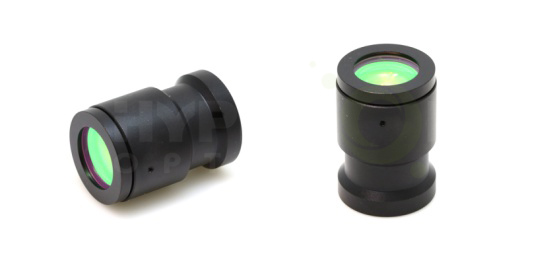
Hyperion Optics SWIR lens

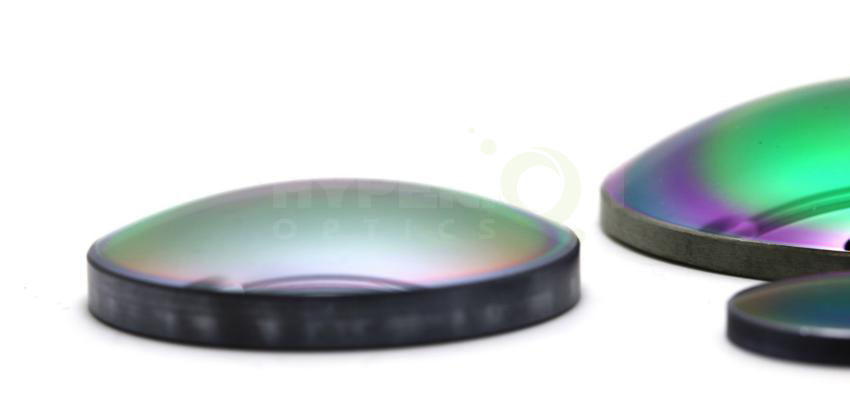
Shortwave Infrared wavelength band offers a unique imaging advantages over visible and other thermal bands. So it is quietly earning a growing place in industrial machine vision for quality inspection and in military applications. SWIR lenses are utilized where other detectors or cameras are not sensitive enough for the finite detail recognition. At Hyperion Optics, we have developed a series of SWIR lenses to meet the latest advancement of SWIR technology. Our design is for high-resolution operation at low light level. It also offers a superior image quality, better transmission, and performance. Our SWIR lenses function in the wavelengths of 900nm-1700nm / 700nm-3400nm with the detector size up to 20mm diagonal and pixel size of 15-50μm.
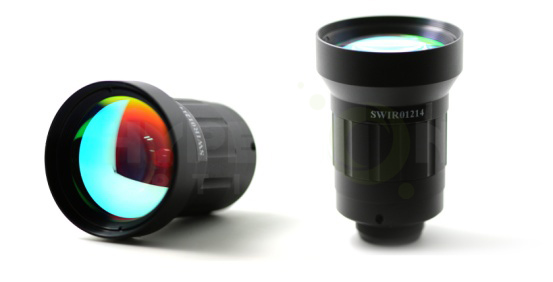
SWIR lenses
Apart from off-the-shelf SWIR optics, Hyperion Optics offers custom SWIR system design, for glass selection, We offer Schott / OHARA based glass choices and has a wide range of Schott and OHARA molded substrates inventory in various diameter and CT which assist us to greatly lower down your investment on glass materials. further to minimize your investment, we offer actual tested refractive index and dispersion testing on CDGM and NHG material equivalents through 0.7μm to 2.5μm for a better performance optimizing at the lowest price. We also can disclose our internal material refractive index and dispersion test data (with correspondent materials stock) for designers to develop your own SWIR system upon request. Glass witness samples can be provided free of charge for index and dispersion testing on customers'side too.

Please talk to one of our experienced optical designers to know how it works.
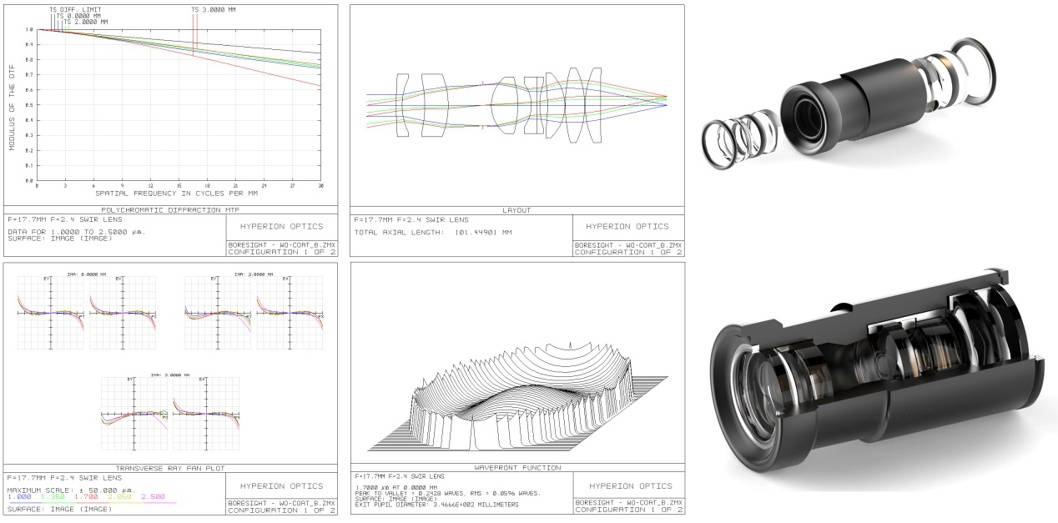
 custom SWIR system design

For custom SWIR design, we encourage the customer to choose materials from NHG for cost-wise decision if your budgetary is tight. Please contact us for latest NHG glass catalog update, since NHG is keeping releasing new refractive index and dispersion data through VIS to 2500nm periodically.

Our custom SWIR prototyping project starts from 2 to 5 sets. For applications such as hyperspectral CCD spectrometer, we also work with customer’s design as a build to print, further to provide assembly and test service. (Including wavefront error, MTF, Transmission etc.)

Off-The-Shelf SWIR Lenses
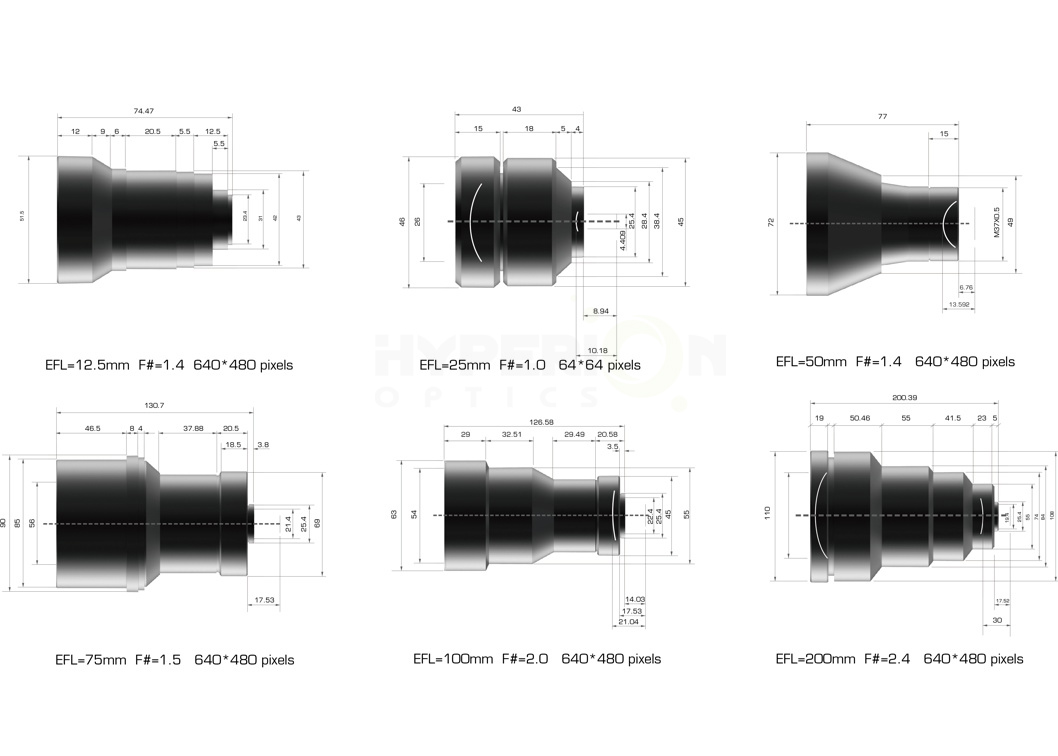
Opto-Mechanical PropertySpecification
Focal Length12.5 mm25 mm50 mm75 mm100 mm200 mm32.4 mm25 mm100 mm
F#1.41.41.41.52.02.41.02.02.0
Wavelength0.7 μm - 1.9 μm0.9μm - 1.7μm0.9μm - 1.7 μm0.9 μm - 1.7 μm0.9 μm - 1.7 μm0.9 μm - 1.7 μm1 μm - 3 μm1.2 μm - 3.4 μm1.5 μm-5 μm
Image Diagonal16 mm20 mm20 mm20 mm20 mm20 mm-3.2 mm12.3 mm
Average Transmission> 85%> 90%> 90%> 90%> 90%> 90%> 85%> 90%> 90%
Circular FOV67.7º43.6º22.6º15.2º11.4º5.7º2.5º7.3º
Back Focus Distance12.6 mm13.526 mm21.76 mm17.53 mm17.53 mm17.526 mm-12.94 mm59 mm
Back Working Distance2.75 mm4.383 mm6.76 mm13.73 mm14.03 mm12.526 mm10 mm8.94 mm54 mm
DimensionLength 82 mm, Φ45 mmLength 53.5 mm, Φ63 mmLength 77 mm, Φ72 mmLength 130.7 mm, Φ90 mmLength 126.58 mm, Φ63 mmLength 200.39 mm, Φ110 mmLength 24 mm, Φ41 mmLength 43 mm, Φ46 mmLength 97 mm, Φ110 mm
Focus TypeManual FocusManual FocusManual FocusManual FocusManual FocusManual FocusFixed FocusManual FocusManual Focus
Focus Range-1 m to infinity1 m to infinity2 m to infinity2 m to infinity2 m to infinity-2 m to infinity2 m to infinity
Mount TypeM 35.5 * 0.525.4 - 32 TPIM 37 * 0.525.4 - 32 teeth / inch25.4 - 32 teeth / inch25.4 - 32 teeth / inchM 41 * 0.7525.4 - 32 teeth / inchM 70 * 1
Detector640 * 480 pixels, 25 μm640 * 480 pixels, 25 μm640 * 480 pixels, 25 μm640 * 480 pixels, 25 μm640 * 480 pixels, 25 μm640 * 480 pixels, 25 μm-64 * 64 pixels, 50 μm640 * 512 pixels, 15 μm
Environmental
Operating Temperature- 20℃ to + 60℃
Storage Temperature- 40℃ to + 80℃
External CoatingAR
Humidity100% RH at 26℃ and 74% RH at 35℃ for 24 hours

If you need further SWIR optics technical support please contact us.

Labels: , , , , ,

Fisheye Lenses for sale

Fisheye Lenses

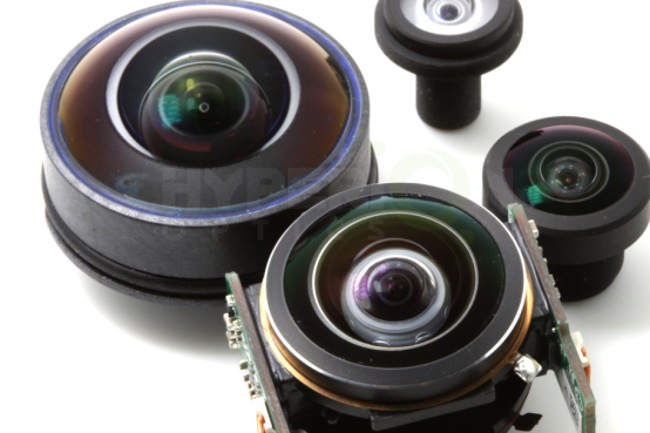
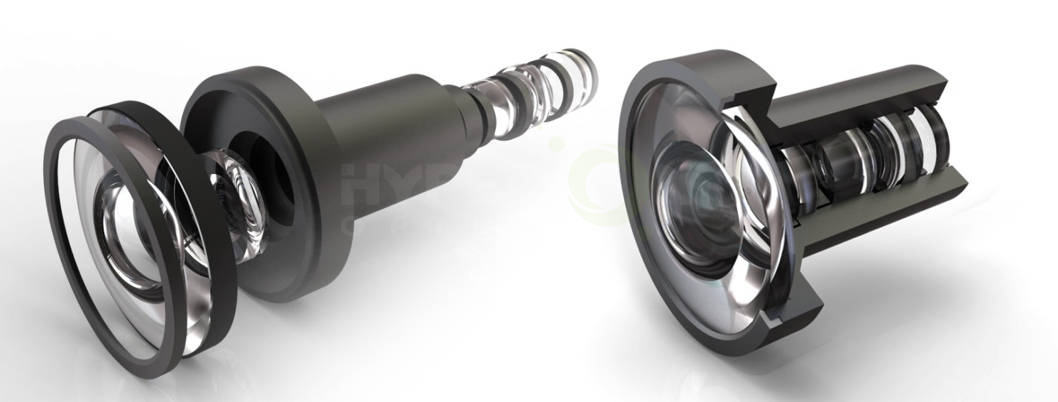
Typically fisheye lens has a front lens group of a greater negative refractive power than an ordinary inverted telephoto wide angle lens, with a large back focal distance. Its extreme power distribution will cause great field curvature in the transmitted image. As fisheye lens leads to significant barrel shaped distortion, to improve field curvature and astigmatism, it is necessary to compose a doublet to avoid significant negative deviation and provide correction of chromatic aberration.

Hyperion Optics designers’ expertise contributes various range of fisheye lenses customized projects, from sminiature fisheye lense used for 360 degree viewing device to 200mm in diameter dome projection fisheye lenses. Our fisheye lens database provides design result and simulations for full frame fisheye lenses, circular image (hemispherical) fisheye lenses with different focal length options.
Hyperion Optics design

Hyperion fishy lense

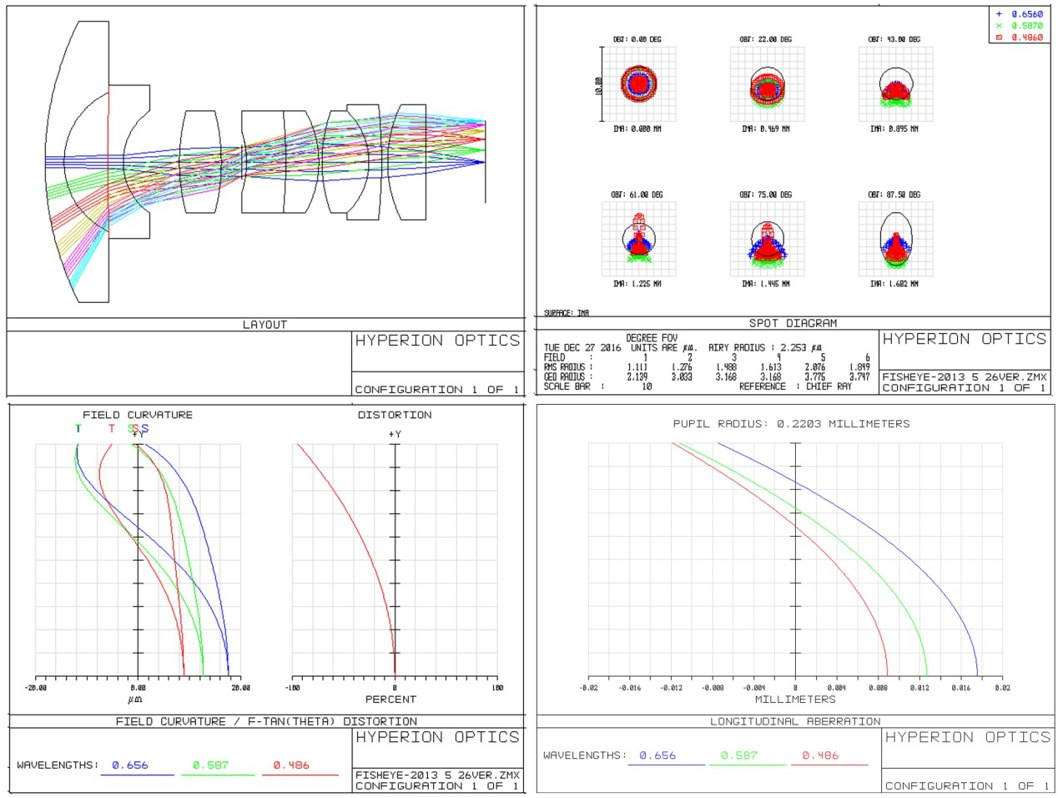
During design process, our designers evaluate relative illumination performance by utilizing real ray trace analysis, vignetting is also used to control off-axis aberrations due to a half stop or full stop in relative illumination is tolerable in conventional photography scenario. Distortion departure from f-theta mapping is also critical in our design phase, according to the initial simulation and calculation; our designers are able to adjust and optimize to reach an ideal solution. We also look into lateral color which is the lateral shift on the image plane intersection between the shortest wavelength chief ray and the longest wavelength chief ray by real ray trace analysis.

Labels: , , , , , , ,

Wednesday, September 6, 2017

Aspherical Lenses

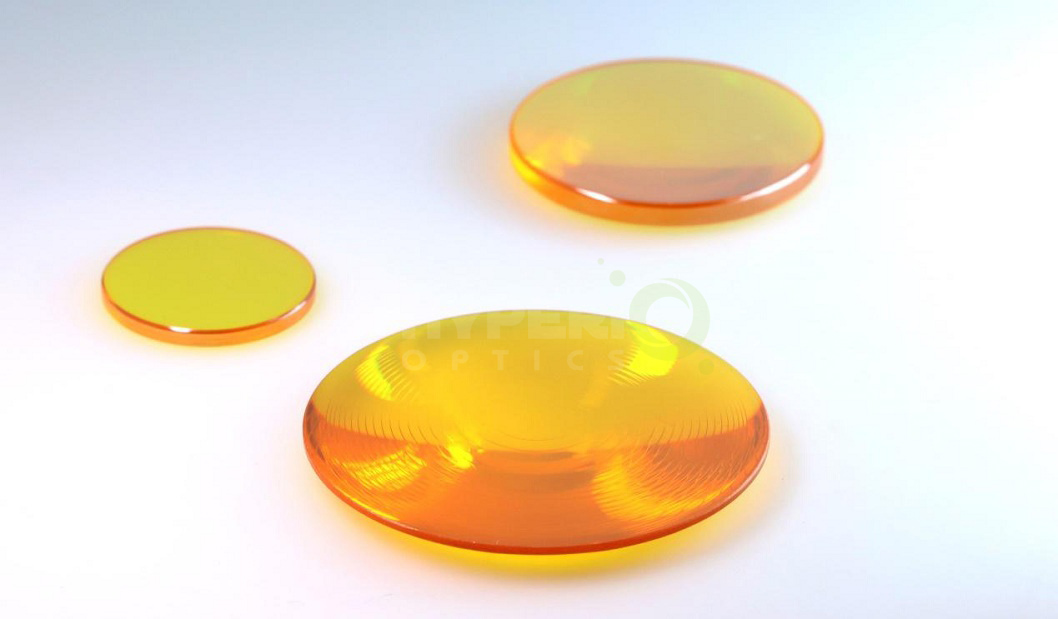
Hyperion Optics’ manufacturing equipment expand our aspherical products’ deliverability to LWIR applications, from high precision VIS imaging systems to infrared athermal lenses, we are able to process on optical glasses and infrared materials such as Germanium, Zinc Sulfide, Zinc Selenide, Calcium Fluoride, Chacolgenide glasses etc.

We insist to simulate every aspherical equation and specs from customer’s inquiry to make sure we are capable of delivery, and provide suggestions based on our study and understanding. For complicated design, we are willing to run trial test on H-K9 glass to verify your design’s feasibility, with profiler map provided for customer’s reference.

Our aspherical lenses manufacturing cost also assists our customers to use aspherical surfaces in their design to achieve better system performance or compactable goal, meanwhile keep pricing competency in the market.

We are able to work on optics LRIP project (low ratio initial production) , such as 5-10 pieces for optical feasibility study, to volume 200 pieces to 500 pieces production. Let us know your delivery plan; we can work on precise part dispatch planning.

Asphere Lenses

Optical Machining Centers

Due to the more complex surface profile of asphere which significantly reduces or eliminate optical aberrations as compared to the simple lens, Aspheric lenses have at least one surface that is not a true sphere,It has been more widely exploited in the lens optical design stage.

IR Asphere Lenses


aspheric parts in LIRP project
At Hyperion Optics, we work with various infrared materials. Besides spherical parts, with increasing demand of IR aspheric components, designers are more likely to use aspheric parts in LIRP projects to meet relatively reliable performance meanwhile to decrease the element quantity within the system. Our aspheric component manufacturing capability covers 0.8 micron up to 12 micron for your infrared application from combination of materials needed in order to achieve your application expectation.

Diffractive Optical Elements

Diffractive optical elements (DOEs)

Diffractive optical elements (DOEs) shape and split laser beams in an energy-efficient manner. You can implement a broad range of applications with minimal light loss – examples of diffractive micro optics can be found in production facilities for laser material processing, in medical laser treatments and diagnostic instruments, in areas such as lighting, printing technologies, and lithography as well as in measuring and metrology systems. DOEs are used to pattern light in work areas for custom illumination. Hyperion Optics offers DOEs for all wavelengths across the spectrum.

Parabolic Mirrors

Parabolic reflectors design

Parabolic reflectors are used to collect energy from a distant source (for example sound waves or incoming star light). Since the principles of reflection are reversible, parabolic reflectors can also be used to focus radiation from an isotropic source into a narrow beam. In optics, parabolic mirrors are used to gather light in reflecting telescopes and solar furnaces, and project a beam of light in flashlights, searchlights, stage spotlights, and car headlights. In radio, parabolic antennas are used to radiate a narrow beam of radio waves for point-to-point communications in satellite dishes and microwave relay stations, and to locate aircraft, ships, and vehicles in radar sets. In acoustics, parabolic microphones are used to record faraway sounds such as bird calls, in sports reporting, and to eavesdrop on private conversations in espionage and law enforcement.

Labels: , , , , , ,

What is optical mirror

Optical Mirrors are designed to reflect light for a variety of applications, including beam steering, interferometry, imaging, or illumination. Optical Mirrors are used in a wide range of industries, such as life sciences, astronomy, metrology, semiconductor, or solar.

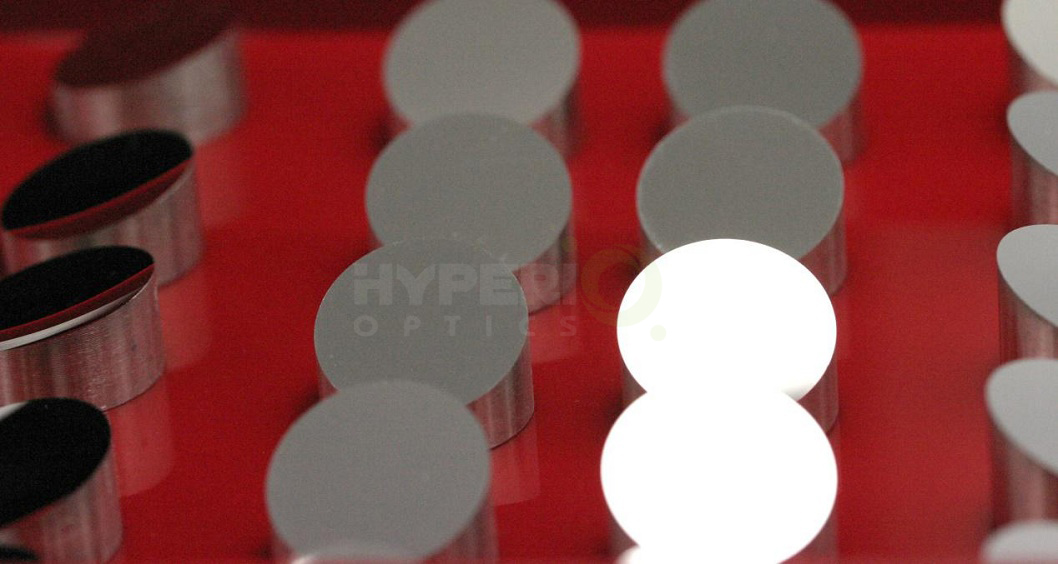
Hyperion Optics offers a range of laser, flat, metal substrate, focusing, or specialty Optical Mirrors in a multitude of reflective coating options, including Protected Aluminum, Enhanced Aluminum, Protected Silver, Protected Gold, or Dielectric. Choosing the proper reflective coating option ensures high reflectivity of the needed wavelength or wavelength range. Optical Mirrors designed for laser applications are optimized for the given laser wavelength. Additionally, Optical Mirrors designed for lasers feature damage thresholds that are suitable for the designated laser. Metal substrate Optical Mirrors are ideal for applications requiring a constant coefficient of thermal expansion between the Optical Mirror and the mount. Optical Mirrors with a concave surface are ideal for light focusing applications.

Optical mirrors have a smooth, highly-polished, plane or curved surface for reflecting light. Usually, the reflecting surface is a thin coating of silver, or aluminum on glass. Product specifications for optical mirrors include diameter, radius of curvature, thickness focal length, and surface quality. The diameter or height of an optical mirror is measured straight on. If the optical mirror’s curvature was extrapolated into a sphere, then the radius of that sphere is the radius of curvature for the mirror. There are two thickness measurements for optical mirrors: center thickness and edge thickness. Units of measure include inches, feet, and yards; nanometers, centimeters, and millimeters, and miles and kilometers. With optical mirrors, focal length is the distance from the mirror at which light converges. Surface quality describes digs and scratches. A dig is a defect on a polished optical surface that is nearly equal in terms of length and width. A scratch is a defect whose length is many times its width.

Optical mirrors are made from many different materials, each of which influences the mirror’s reflectivity characteristics. Choices for materials include borosilicate glass, copper, fused silica, nickel, and optic crown glass. Borosilicate glass is also known as BK7 and boro-crown glass. Copper is used in high-power applications because of its high thermal conductivity. Fused silica has a very low coefficient of thermal expansion and is suitable for use with moderately-powered lasers or changing environmental conditions. Ultraviolet (UV) grade optical mirrors are also commonly available. Nickel is used in applications which require resistance to both thermal and physical damage. Proprietary materials for optical mirrors include Pyrex (Corning Inc.) and Zerodur (Schott Glaswerke).

Optical mirrors are sometimes coated to enhance their reflectivity. Choices include bare, enhanced, and protected aluminum; silver, bare gold and protected gold; and coatings made from rhodium and dielectric materials. Enhanced aluminum coatings are used to improve reflectance in the visible and ultraviolet regions. Protected aluminum coatings provide abrasion resistance while protecting the surface of the aluminum, an excellent reflector in the upper UV, visible and near-infrared (IR) regions. Optical mirrors with bare gold and protected gold coatings are used in the near-IR to far-IR regions. Silver coatings provide better reflectance than aluminum; however, silver’s tendency to oxidize and tarnish requires thorough sealing from the atmosphere. Rhodium coatings have a reflectivity of approximately 80% of the visible spectrum.


Heat mirrors and cold mirrors are special bandpass filters that can reflect infrared light and ultraviolet light and only allow visible light to pass through, also known as heat-absorbing filters, also known as IR cut filters. Heat Mirror will be a large number of heat generated near-infrared light isolated optical path to protect the heat-sensitive devices, where the need for high light intensity and need to be separated from the heat applications can be.

Dielectric HR Mirror
Reflective film from the coating material can generally be divided into two categories; one is the reflective metal film, one is all dielectric reflective film.

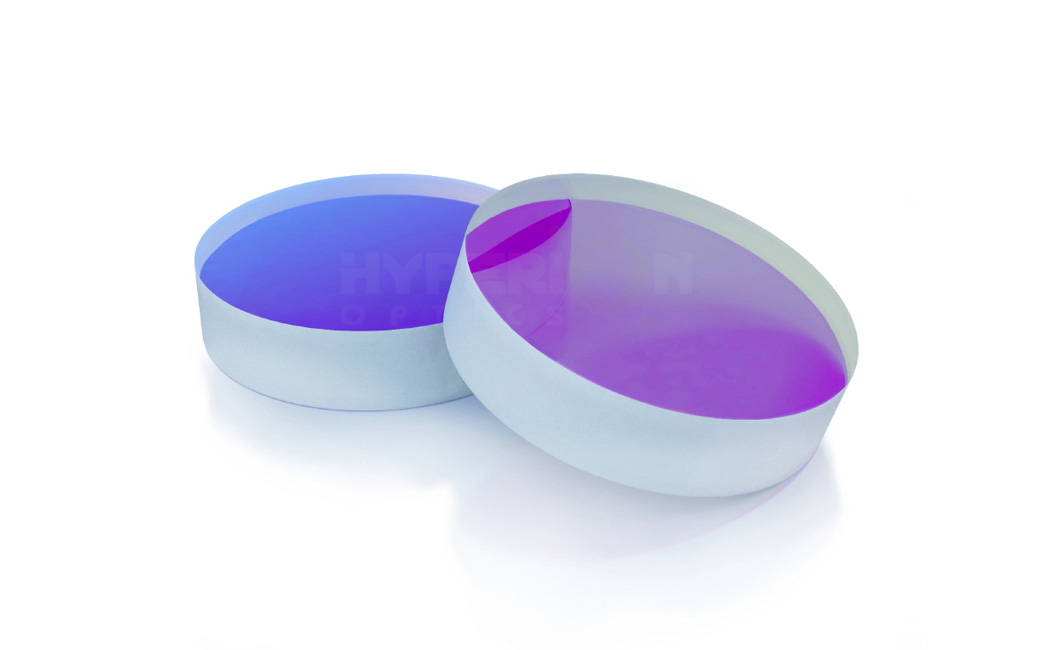
Media reflection film using the principle of multi-beam interference, which, contrary to the media anti-reflective film, can significantly improve the light in the air glass interface reflectivity. By alternately plating high and low refractive index multilayer films on the surface of the lens, the synthetic amplitude of the reflected light can be increased, and the reflectivity of the reflective film can be more than 99.9% of specially optimized design. In contrast, the reflectivity of the reflective metal film is only 97%.

Labels: , , , ,